How to Avoid Overspending on a Home Extension
Planning a home extension is exciting, but many homeowners worry about costs increasing during the project. Understanding how to avoid overspending on a home extension is one of the most important steps before starting design work. Working with experienced architectural services can help you make practical design decisions, create clear buildable drawings, and control costs while still improving how your home works.
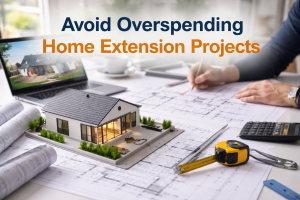
The good news is that it is possible to avoid overspending on a home extension. With the right design decisions and early planning, you can control costs while still creating a space that works well for your home.
This guide explains the key factors that affect costs and how good architectural design helps keep your project within budget.
Why Home Extensions Go Over Budget
Many extensions go over budget because important decisions are made too late in the process. When changes happen during construction, they often cost far more than if they had been planned earlier.
Common causes include:
-
Poor or incomplete design drawings
-
Structural complications discovered during the build
-
Late design changes
-
Underestimating construction costs
-
Inefficient layouts that increase build complexity
Because of this, careful planning at the design stage is one of the most effective ways to control the overall cost of a project.
How Good Design Helps Avoid Overspending on a Home Extension
One of the biggest ways to avoid overspending on a home extension is through practical design. Good design is not only about appearance. It is also about making the building efficient to construct.
For example, a well-designed extension will often:
-
Use simple structural layouts
-
Align new walls with existing walls
-
Reduce complicated roof structures
-
Minimise unnecessary steelwork
-
Use standard construction methods
As a result, builders can price the project more accurately and construction becomes more straightforward.
Avoid Overspending on a Home Extension by Planning Early
Early planning is one of the most important steps in keeping costs under control.
Before construction begins, it is important to consider:
-
How the extension connects to the existing house
-
Structural implications
-
Drainage and services
-
Access during construction
-
Planning and Building Regulations requirements
For official Planning guidance, you can refer to:
https://www.gov.uk/planning-permission-england-wales
For official Building Regulation guidance, you can refer to:
Addressing these issues early helps avoid surprises later in the project.
Avoid Overspending on a Home Extension with a Clear Design Brief
Another important step is having a clear design brief from the beginning.
This means thinking carefully about:
-
How the space will be used
-
The size of the extension
-
Natural light and layout
-
Long-term usability of the space
Without a clear brief, designs often change during the project. These changes can quickly increase construction costs.
Avoid Overspending on a Home Extension by Controlling Design Changes
Design changes during construction are one of the most common reasons projects go over budget.
For example, changing the layout, adding larger openings, or altering structural elements can require additional work and materials.
Because of this, it is usually far more cost-effective to finalise the design before work begins.
Understanding Construction Costs
Construction costs vary widely depending on location, complexity, and the specification of materials.
If you want to understand typical price ranges, you can read this guide:
How Much Does a House Extension Cost? (2026)
Contract administration follows recognised professional standards used across the construction industry. Guidance on consultant appointments and contract administration services can be found through the Royal Institution of Chartered Surveyors (RICS).
For broader construction cost guidance in the UK, the Royal Institution of Chartered Surveyors (RICS) also provides useful industry insights.
Professional Design Can Help Avoid Overspending on a Home Extension
Many homeowners assume professional design services increase project costs. In reality, the opposite is often true.
A well-planned design can:
-
Reduce unnecessary construction complexity
-
Prevent costly design mistakes
-
Improve build efficiency
-
Provide clearer information for builders to price accurately
As a result, professional design often saves money across the entire project.
Final Thoughts
Home extensions do not have to run over budget. In fact, with careful planning and practical design decisions, it is possible to avoid overspending on a home extension while still creating a high-quality living space.
The key is to make informed decisions early, finalise the design before construction begins, and ensure the project is designed with buildability and cost control in mind.
Related articles:
If you are planning an extension and want practical advice on layout, buildability, and cost control, professional guidance can make the process far easier.
Book your initial consultation with Alan now – just call 07590 563823 during office hours or email us today! or you can complete this form – we will be in touch very shortly.