
Loft Conversion
Loft conversion homeowners commission are one of the best ways to add space without extending a property. They can also increase value. On this page, you’ll find guidance on costs, planning permission, building regulations, and how I approach loft conversion projects efficiently and cost-consciously.
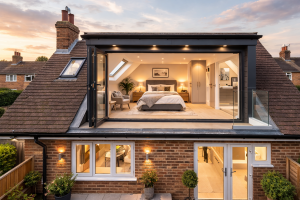
If you are considering a loft conversion, the first step is to understand what is possible. Every roof structure is different. That’s why a careful assessment is essential before producing any drawings.
Why Loft Conversion Homes Benefit From Careful Design
Every property is unique. Therefore, not all loft conversions allow are straightforward.
Several factors affect what can be achieved:
-
Existing roof structure
-
Available head height
-
Position of load-bearing walls
-
Staircase location
-
Natural light
-
Planning restrictions
For example, a traditional cut roof is often easier to convert than a trussed rafter roof. However, even trussed roofs can be altered with correct structural design.
Before moving forward, I carry out a feasibility review. As a result, you will understand the options clearly before committing to further expense.
Is Your Loft Suitable?
Suitability depends on:
-
Internal height (ideally around 2.2m before works)
-
Roof pitch
-
Property type
-
Previous extensions
-
Local planning constraints
I have a few basic questions that I send via email to prospective clients considering a loft conversion. These questions highlight the technical elements to consider early, before any money is spent.
Sometimes, a simple rooflight conversion is possible. Other times, a dormer or hip-to-gable alteration may be required. Therefore, early assessment avoids unnecessary redesign later.
Types of Loft Conversions
Loft conversion homeowners often choose include:
Rooflight Conversions
These are usually the most cost-effective. Because the roof shape stays the same, structural changes are limited.
Dormer Conversions
Dormers add usable floor space. As a result, they are popular locally.
Hip-to-Gable Conversions
Common for semi-detached homes, these increase internal volume significantly.
Mansard Conversions
These involve major alteration. Therefore, planning permission is usually required.
The right solution depends on your property and long-term goals.
Loft Conversion Costs
Costs vary by structure, layout, and specification. Typical ranges:
-
Rooflight conversion: £35,000 – £55,000
-
Dormer conversion: £45,000 – £75,000
-
Hip-to-gable: £55,000 – £85,000
-
Mansard: £70,000 – £110,000+
Structural steel, insulation upgrades, and staircase design all affect cost. Careful planning during design helps control the budget.
When designing loft conversions Northamptonshire projects, I focus on efficiency. As a result, unnecessary complexity is avoided.
Planning Permission for Loft Conversions
Many loft conversions fall under Permitted Development. However, this depends on:
-
Volume increase
-
Property type
-
Conservation area status
-
Previous alterations
If planning permission is required, I prepare and manage the application process through my Planning & Building Regulation Drawings service.
You can also review official Building Regulations guidance on the UK Government website.
Building Regulations and Structural Design
All loft conversion properties undertake must comply with Building Regulations. You can view the official guidance here: https://www.gov.uk/building-regulations-approval
This covers:
-
Structural stability
-
Fire safety
-
Staircase compliance
-
Thermal performance
-
Sound insulation
Because safety and compliance are critical, I work with structural engineers where required. As a result, drawings are practical and buildable.
Layout Is Often More Important Than Size
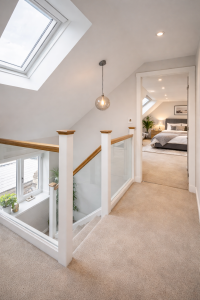
Many homeowners focus only on square metres. However, layout often matters more.
For example:
-
A poorly positioned staircase can reduce usable space.
-
Incorrect steel placement can increase cost.
-
Limited headroom can restrict furniture layout.
Therefore, I prioritise efficient planning from the start. The goal is not just to add a room, but to integrate it properly into the home.
Do Loft Conversions Add Value?
In many areas, loft conversions add value. However, value depends on location and ceiling price.
Loft conversions Northamptonshire properties benefit from most when:
-
An additional bedroom improves buyer demand
-
A master suite is created
-
The property moves into a stronger price bracket
Because overcapitalising is a risk, I consider financial practicality during early discussions.
Architectural Technician Offering Loft Conversions
Homeowners often search for a loft conversion architect. However, an Architectural Technician offering architectural services can provide:
-
Practical design
-
Planning drawings
-
Building Regulations packages
-
Cost-conscious detailing
If your priority is a sensible, buildable solution, this approach is often the right fit.
Considering a Loft Conversion?
Before committing to builders, a feasibility discussion can clarify:
-
Structural practicality
-
Planning position
-
Budget expectations
-
Staircase positioning
-
Layout optimisation
If you are considering a loft conversion, feel free to get in touch to discuss your proposal.
Book your initial consultation with Alan now – just call 07590 563823 during office hours or email us today! or you can complete this form – we will be in touch very shortly.
Click here to be taken to my Resources Library where you will find a number of useful documents to download.